The need for hot water is a requirement in many different sectors of industry and business. From textile production to food processing and from hospitals to hotels, hot water supply is indispensable. It is at this point that the hot water generator becomes very important.
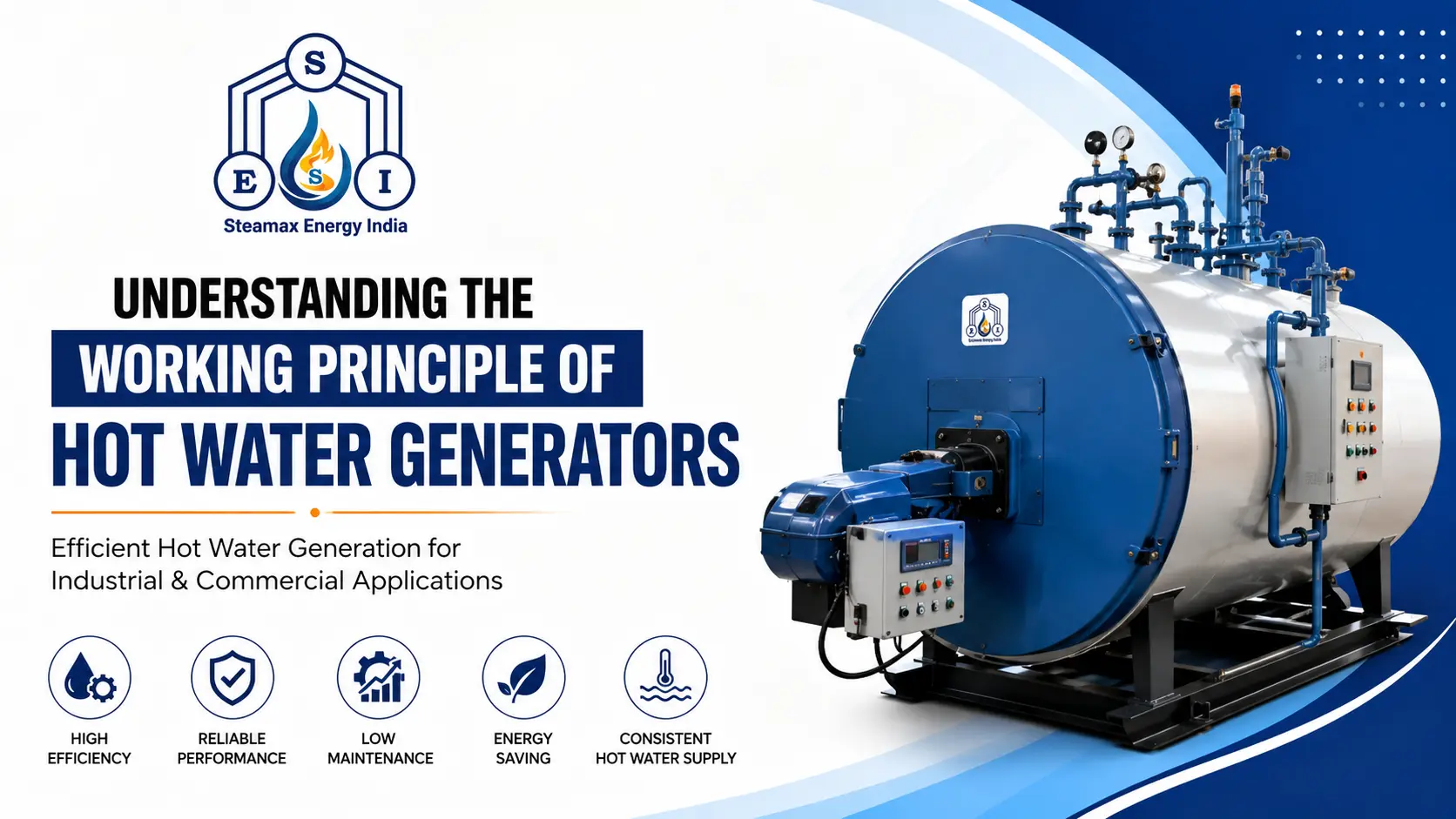
A hot water generator is an efficient heating system designed to produce hot water for industrial and commercial applications. Unlike steam boilers that generate steam, a hot water generation system directly heats water to the desired temperature and circulates it through the required process. Understanding the hot water generator working principle helps industries choose the right system for their operational needs while maximizing efficiency and reducing energy costs.
What is a Hot Water Generator?
A hot water generator is a specialized heating equipment used to produce hot water for process heating and other industrial applications. It transfers heat generated from fuel combustion to water through a heat exchanger, ensuring a continuous and reliable hot water supply.
These systems are commonly used in industries where steam is not required, but hot water is essential for maintaining process temperatures, cleaning, washing, and heating operations.
Also Read: What is Boilers? Boiler Definition, Components, Applications & Functions
Components of a Hot Water Generation System
To understand the hot water generator working principle, it is important to know its key components:
- Burner- The burner is responsible for combusting fuel such as diesel, natural gas, LPG, or furnace oil. It generates the heat required for water heating.
- Combustion Chamber- This is the area where fuel combustion takes place. The heat generated in the chamber is transferred to the heat exchanger.
- Heat Exchanger- The heat exchanger transfers thermal energy from hot gases to water without direct contact between the two mediums.
- Circulation Pump- The pump ensures continuous water circulation throughout the system and maintains uniform temperature distribution.
- Control Panel- Modern hot water generators are equipped with advanced control systems that regulate temperature, pressure, and operational safety.
- Insulated Shell- The outer shell minimizes heat loss and improves overall system efficiency.
Hot Water Generator Working Principle
The hot water generator working principle is based on efficient heat transfer. The process begins when fuel is supplied to the burner. The burner ignites the fuel and produces heat inside the combustion chamber.
The hot combustion gases then pass through the heat exchanger. Water circulating within the system absorbs this heat and reaches the desired temperature. Once heated, the water is delivered to various industrial processes through insulated pipelines.
The cooled combustion gases are safely discharged through a chimney, while the water continues to circulate within the system. This closed-loop operation ensures energy efficiency and consistent hot water availability.
The entire process is automated and monitored through control systems that maintain optimal operating conditions.
Step-by-Step Working Process
- Fuel enters the burner.
- Combustion generates heat.
- Hot gases flow through the heat exchanger.
- Water absorbs thermal energy.
- Heated water is circulated to the application area.
- Temperature is monitored and controlled automatically.
- Continuous circulation maintains a stable hot water supply.
This simple yet effective mechanism makes the hot water generation system highly efficient and reliable.
Advantages of a Hot Water Generator
- Energy Efficiency- Modern hot water generators are designed to maximize heat transfer while minimizing fuel consumption. This helps industries reduce operational expenses.
- Continuous Hot Water Supply- The system provides a steady supply of hot water, ensuring uninterrupted industrial operations.
- Faster Heating- A hot water generator quickly achieves the required temperature, reducing process delays and improving productivity.
- Lower Maintenance- Compared to many traditional heating systems, modern hot water generators require less maintenance and offer reliable performance.
- Compact Design- Most systems are designed to occupy minimal floor space, making them suitable for facilities with limited installation areas.
- Operational Safety- Advanced control systems and safety mechanisms ensure secure operation under varying working conditions.
Industrial Applications of Hot Water Generators
A hot water generation system is widely used across multiple industries.
- Textile Industry- Used for dyeing, washing, bleaching, and finishing processes.
- Food Processing Industry- Provides hot water for cleaning, sterilization, and process heating.
- Pharmaceutical Industry- Supports manufacturing processes requiring controlled temperature conditions.
- Hotels and Hospitality- Ensures a continuous supply of hot water for guest rooms, kitchens, and laundry services.
- Hospitals- Used for sanitation, sterilization, and patient care applications.
- Chemical Industry- Provides process heating for various manufacturing operations.
- Dairy Industry- Used for cleaning equipment and maintaining production temperatures.
Types of Hot Water Generators
- Oil-Fired Hot Water Generator- Operates using diesel or furnace oil and is suitable for various industrial applications.
- Gas-Fired Hot Water Generator- Uses natural gas or LPG and is known for cleaner combustion and higher efficiency.
- Multi-Fuel Hot Water Generator- Can operate on different fuels, offering flexibility and cost advantages.
Factors to Consider When Selecting a Hot Water Generator
Before investing in a hot water generator, industries should consider:
- Required water temperature
- Daily hot water demand
- Fuel availability
- Thermal efficiency
- Installation space
- Operating costs
- Maintenance requirements
- Safety features
Choosing the right system ensures long-term performance and cost savings.
Why Industries Prefer Modern Hot Water Generation Systems
Industries today focus on energy efficiency, productivity, and sustainability. Modern hot water generation systems are designed to meet these requirements by providing reliable heating solutions with lower fuel consumption and reduced emissions.
With advanced automation, improved heat transfer technology, and robust construction, these systems deliver superior performance while helping businesses control operating costs.
Conclusion
Understanding the hot water generator working principle helps industries make informed decisions when selecting heating equipment. A well-designed hot water generator ensures continuous hot water availability, improved energy efficiency, and reliable performance for a wide range of industrial and commercial applications.
As industries continue to seek cost-effective and efficient heating solutions, modern hot water generation systems have become an essential part of operational infrastructure. By investing in a high-quality hot water generator, businesses can improve productivity, reduce energy expenses, and maintain smooth day-to-day operations.