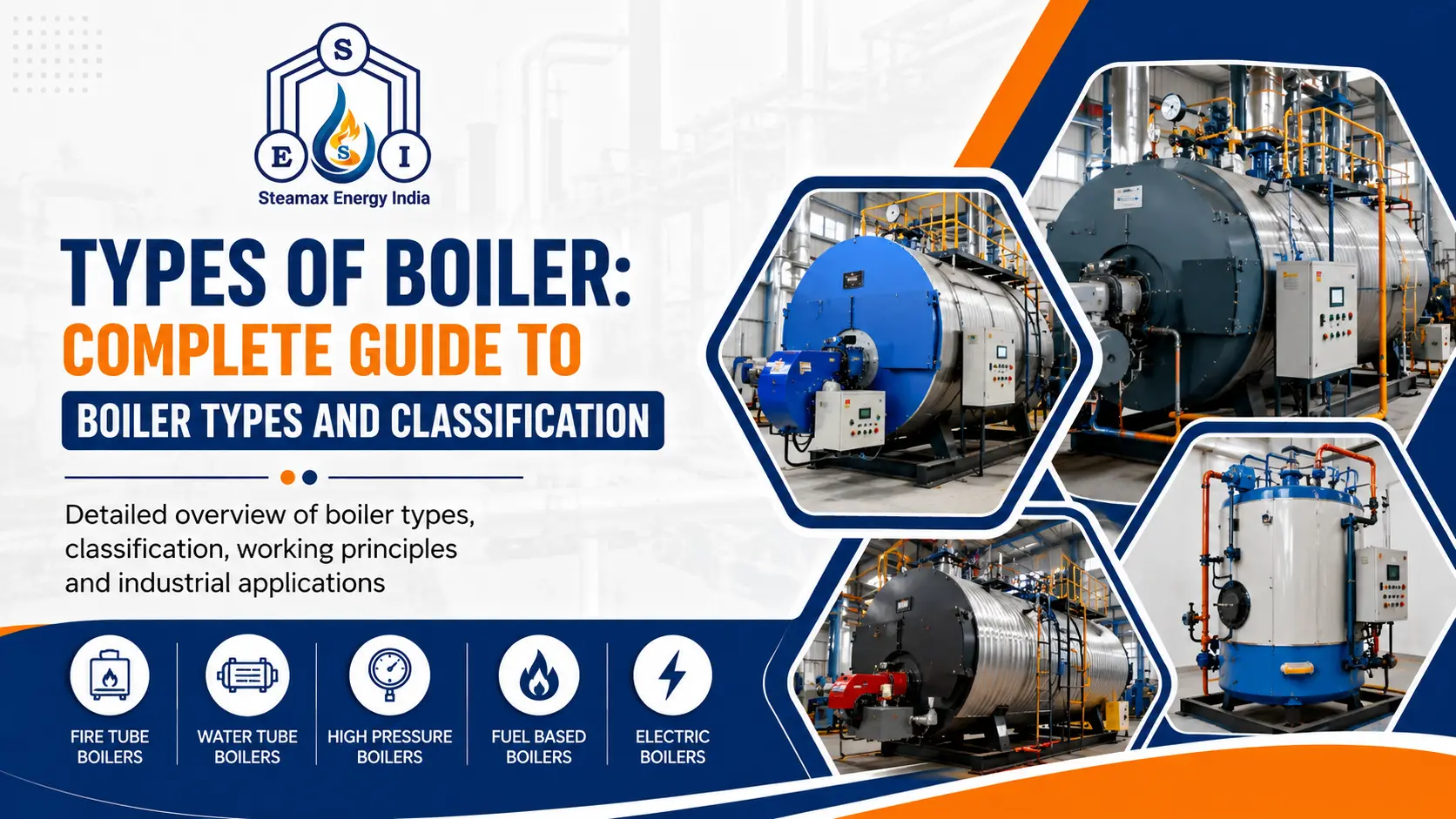
Boilers are one of the major equipment items required by industries involved in manufacturing, electricity generation, food production, pharmacy, textile, chemical industries, and so forth. The boilers are meant to produce steam or hot water required for the industrial operations. The need for knowledge about the types of boilers is critical to enable selection of the most suitable kind of boiler.
In this comprehensive guide, we will explore the classification of boiler, various boiler types and classification, their applications, and their role in industrial and power plant operations.
What is a Boiler?
Click above link to Read more about what is boiler
Before selecting a boiler, it is important to understand the boiler classification system, which categorizes boilers based on different operating principles and construction designs.
Classification of Boiler
The classification of boiler can be done in several ways depending on design, pressure, fuel type, circulation method, and application.
1. Classification Based on Contents Inside Tubes
This is one of the most common methods of classification of boilers.
Fire Tube Boiler
They are one of the most common types of boilers. In this type, hot combustion gases pass through tubes and heat the surrounding water, turning it into hot water or steam. Fire tube boilers are widely used Due to their simple design and affordable price. Fire-tube boilers are one of the oldest types of boilers and are widely used in industries that require low to medium pressure steam. These are efficient, cost-effective boilers and are suitable for small industries or residential heating systems.
Water Tube Boiler
Water-tube boilers are designed for high-pressure operations and are ideal for large-scale industries. These are used in power plants, refineries, and manufacturing plants where high steam production is essential. In this type of boiler, water circulates inside the tubes, and hot gases pass around them. These boilers are used to produce high-pressure steam, as water and steam flow through the tubes.
Advantages:
- High steam generation capacity
- Suitable for high-pressure applications
- Better efficiency
Applications:
- Power plants
- Chemical industries
- Large manufacturing units
2. Classification of Steam Boilers Based on Pressure
The classification of steam boilers can also be based on operating pressure.
Low-Pressure Boilers
These boilers operate at lower pressure and are generally used in small industrial facilities.
Medium-Pressure Boilers
Suitable for medium-sized manufacturing operations that require continuous steam supply.
High-Pressure Boilers
Designed for large industries and power generation applications where high steam output is required.
3. Classification Based on Fuel Used
Another important boiler classification method is based on the fuel source.
Coal-Fired Boilers
These boilers use coal as the primary fuel and are commonly found in large industrial applications.
Oil-Fired Boilers
Oil-fired boilers use diesel or furnace oil to generate steam efficiently.
Gas-Fired Boilers
These boilers operate on LPG or natural gas and are known for clean combustion and high efficiency.
Biomass-Fired Boilers
Biomass boilers use agricultural waste, wood chips, briquettes, and other renewable fuels.
Electric Boilers
Electric boilers use electricity instead of conventional fuels and are suitable for locations requiring clean operations.
4. Classification Based on Boiler Position
Horizontal Boilers
Horizontal boilers are widely used in industries due to their easy installation and maintenance.
Vertical Boilers
Vertical boilers occupy less floor space and are commonly used where installation space is limited.
5. Classification Based on Water Circulation
Natural Circulation Boiler
Water circulation occurs naturally due to density differences between hot and cold water.
Forced Circulation Boiler
Water movement is achieved using pumps, ensuring better heat transfer and higher efficiency.
How Many Types of Boiler Are There?
Many industrial users often ask, how many types of boiler are available in the market. The answer depends on the classification method being used.
Broadly, boilers can be categorized into:
- Fire Tube Boilers
- Water Tube Boilers
- Steam Boilers
- Hot Water Boilers
- Electric Boilers
- Oil-Fired Boilers
- Gas-Fired Boilers
- Biomass Boilers
- IBR Boilers
- Non-IBR Boilers
Each type is designed to meet specific industrial requirements.
Types of Boiler in Power Plant
The types of boiler in power plant applications differ significantly from standard industrial boilers because power generation requires high-pressure and high-capacity steam production.
Pulverized Coal Boilers
These boilers are commonly used in thermal power stations and generate large volumes of steam.
Supercritical Boilers
Supercritical boilers operate at extremely high pressure and temperature levels to improve efficiency.
Once-Through Boilers
These advanced boilers allow water to pass through the system only once, making them suitable for modern power plants.
Waste Heat Recovery Boilers
These boilers recover heat from industrial exhaust gases and convert it into useful steam. The selection of types of boiler in power plant depends on plant capacity, fuel availability, and efficiency requirements.
Importance of Proper Boiler Selection
Selecting the correct boiler is critical for achieving operational efficiency and cost savings.
Important factors include:
- Steam capacity
- Fuel availability
- Thermal efficiency
- Pressure requirements
- Installation space
- Maintenance costs
- Environmental regulations
A properly selected boiler improves productivity while reducing energy consumption and operating expenses.
Why Understanding Boiler Classification Matters
Understanding boiler types and classification helps industries make informed investment decisions. Different boiler designs offer different advantages, efficiencies, and operating capabilities.
A clear understanding of the classification of boiler also helps businesses comply with safety regulations and choose systems that meet their production requirements.
Conclusion
Understanding the various types of boiler, their design principles, and applications is essential for selecting the right steam generation system. From fire tube and water tube designs to fuel-based and pressure-based classifications, each boiler serves a unique purpose.
Whether you are looking for industrial steam generation or evaluating the types of boiler in power plant applications, knowledge of boiler classification, classification of boilers, and classification of steam boilers can help you make better operational and investment decisions.
By choosing the right boiler technology, industries can improve efficiency, reduce fuel consumption, enhance productivity, and ensure reliable long-term performance.