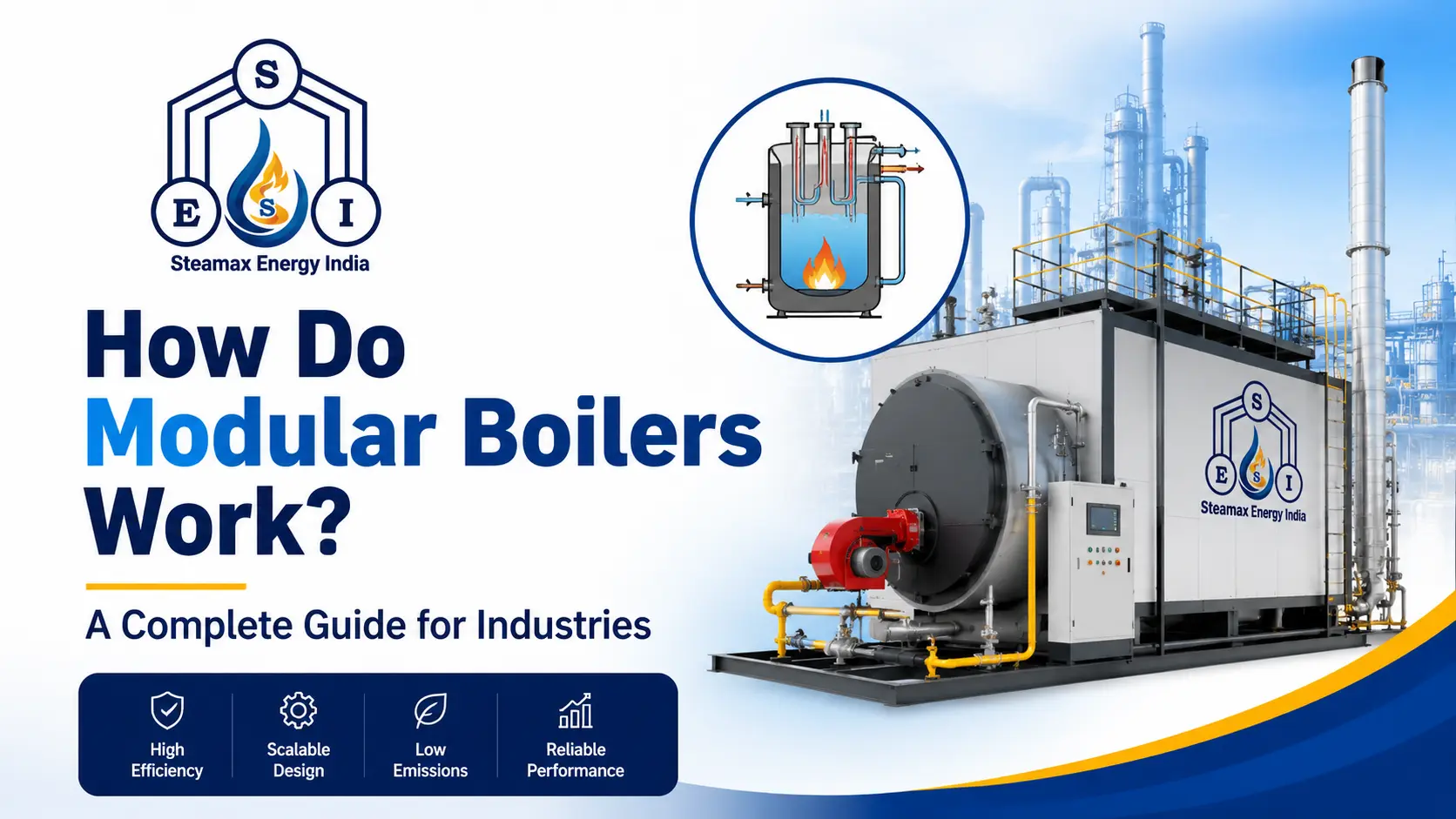
Industries that require a dependable supply of steam or hot water often need a boiler system that can respond to changing production demands. This is where modular boilers offer an efficient and flexible solution. Instead of depending on one large boiler, a modular system uses multiple smaller boiler units that work together to meet the required heating load.
Modern industries such as food processing, pharmaceuticals, chemicals, textiles, hospitality, and manufacturing are increasingly considering modular boiler systems because they can provide better load management, operational flexibility, and redundancy. In this guide, we will explain how a modular boiler works, its main components, advantages, applications, and why it can be a practical choice for industrial heating requirements.
What Are Modular Boilers?
Modular boilers are heating systems made up of two or more individual boiler units connected to a common steam, hot water, fuel, and control system. Each module can operate independently or work simultaneously with other modules depending on the heating demand.
For example, if an industry requires a small amount of steam during low-production hours, only one boiler module may operate. When production increases, additional modules automatically start to provide the required capacity.
This operating concept makes modular systems different from conventional single large-capacity boilers. Rather than continuously running one large boiler at a low load, the system can distribute the demand across multiple units.
Depending on the application, modular systems can be designed as modular steam boilers or hot water heating systems.
Also Read: Boiler Insulation: The Most Ignored Source of Energy Savings
How Do Modular Boilers Work?
The working principle of modular boilers is relatively straightforward. Multiple boiler modules are connected through a common control system. The system continuously monitors the heating requirement and decides how many modules need to operate.
When there is a demand for steam or hot water, the control system activates one or more modules. The selected modules burn fuel or use another heat source to generate the required thermal energy.
In a steam application, water enters the boiler module and is heated until it produces steam. The generated steam is then supplied through a common steam header to different production processes.
In hot water applications, heated water circulates through the industrial heating system. Modular hot water boilers are particularly useful for facilities requiring consistent hot water for process heating, washing, space heating, or other thermal applications.
As the demand changes, the control system can bring additional modules online or shut down modules that are no longer required. This allows the boiler plant to match its output more closely with the actual load.
Main Components of a Modular Boiler System
A modular boiler installation contains several important components that work together to provide reliable heating.
Individual Boiler Modules
Each module is essentially a complete boiler unit capable of generating steam or hot water. Depending on the design, modules can have their own burner, heat exchanger, safety controls, pumps, and monitoring systems.
Common Steam or Hot Water Header
For steam-generating systems, individual modules generally connect to a common steam header. This header collects steam from operating units and distributes it to the required processes.
For hot water systems, common supply and return connections allow heated water to circulate through the facility.
Automatic Control System
The control system is one of the most important parts of modular boilers. It monitors parameters such as temperature, pressure, flow, and heating demand. Based on these conditions, it determines when modules should start, stop, or adjust their output.
Burners and Fuel System
The burner supplies the heat needed to generate steam or hot water. Depending on the boiler design and fuel availability, the system may use natural gas, diesel, biomass, or other suitable fuels.
Safety and Monitoring Equipment
Boiler systems operate under pressure and temperature conditions, making safety essential. Pressure controls, temperature sensors, safety valves, flame monitoring, low-water protection, and other safety devices help maintain controlled operation.
What Makes Modular Steam Boilers Different?
Modular steam boilers are designed specifically for applications where steam demand can vary throughout the day. Instead of operating a single large boiler continuously, multiple smaller steam-generating units can be staged according to demand.
Suppose a factory has a total steam requirement of 2,000 kg/hr, but the demand varies between 500 kg/hr and 2,000 kg/hr. A properly designed modular system can divide the capacity among several modules. During low demand, fewer modules operate, while additional modules start as the steam requirement increases.
This approach can help industries manage fluctuating process loads more effectively.
Advantages of Modular Boilers for Industries
One of the biggest advantages of modular systems is flexibility. Since multiple units are available, the plant can adjust boiler operation according to actual demand.
Another important benefit is redundancy. If one module requires maintenance, other modules can continue operating, depending on the total installed capacity. This can reduce the impact of unexpected downtime.
Modular systems can also provide better part-load operation. A large conventional boiler operating continuously at very low capacity may not always operate at its most efficient point. Modular units allow the plant to switch modules on or off according to demand.
Maintenance can also become more manageable because individual modules can often be serviced without shutting down the entire heating system.
Furthermore, modular boilers can be expanded as production requirements increase. Additional modules may be incorporated into a properly planned system without replacing the entire boiler plant.
Modular Hot Water Boilers: Where Are They Used?
Modular hot water boilers are suitable for industries and commercial facilities that need continuous hot water or heating rather than process steam.
They can be used in food and beverage facilities, hotels, hospitals, laundries, chemical plants, manufacturing units, and other facilities requiring controlled hot water.
The modular configuration allows operators to maintain a stable water temperature while adjusting the number of operating units according to the heating requirement.
Applications of Modular Boiler Systems
Modular boiler technology can be used across several industries. Food processing plants use steam and hot water for cooking, cleaning, sterilization, and processing. Pharmaceutical facilities may require steam for sterilization and controlled manufacturing processes.
Textile industries use steam for dyeing, finishing, drying, and other processes, while chemical industries use thermal energy for heating and processing applications.
Commercial facilities, hotels, laundries, and institutional buildings can also benefit from modular heating systems where the thermal load changes throughout the day.
The correct configuration depends on factors such as required steam or hot water capacity, operating pressure, fuel type, load pattern, available space, and process requirements.
Modular Boilers vs. Conventional Boiler Systems
A conventional boiler plant may depend on one large boiler to handle the majority of the facility’s heating requirement. Modular boilers divide this capacity among multiple units.
The key difference is therefore load management. With a modular arrangement, operators can run only the number of modules needed at a particular time.
For facilities with relatively stable and predictable loads, a conventional boiler may still be appropriate. However, for industries experiencing significant variations in steam or hot water demand, a modular approach can provide greater operational flexibility.
How to Choose the Right Modular Boiler
Before selecting a modular boiler system, industries should evaluate their actual heating requirements rather than simply choosing a boiler based on maximum capacity.
Important factors include peak and minimum load, steam pressure or hot water temperature, fuel availability, operating hours, space limitations, future expansion plans, and required redundancy.
It is also important to consider the boiler’s control system, burner performance, safety features, maintenance requirements, and overall system design.
Working with an experienced modular boiler manufacturer can help industries determine the appropriate number and capacity of modules for their specific application.
Why Industries Are Considering Modular Boiler Technology
Industrial heating requirements are rarely constant. Production schedules change, seasonal demand varies, and some processes operate only for limited periods. A boiler system that can respond to these changes can make plant operation more practical.
Modular technology addresses this requirement by combining multiple independent boiler units with intelligent controls. It offers industries the ability to increase or decrease heating capacity without relying entirely on one large unit.
For companies looking for a flexible solution for steam or hot water generation, modular boiler technology can therefore be worth evaluating as part of a modern industrial heating strategy.
Conclusion
So, how do modular boilers work? In simple terms, they use multiple independent boiler units that operate together according to the heating demand of the facility. A centralized control system stages the modules, allowing the system to increase or decrease output as production requirements change.
Whether an industry needs modular steam boilers for process steam or modular hot water boilers for heating and hot water applications, the modular concept provides flexibility, scalability, and operational redundancy.
For industries planning a new boiler installation or upgrading an existing heating system, choosing the right configuration, capacity, fuel system, and controls is essential. Steamax Energy India can help industries evaluate their requirements and select a suitable boiler solution based on their process and operational needs.