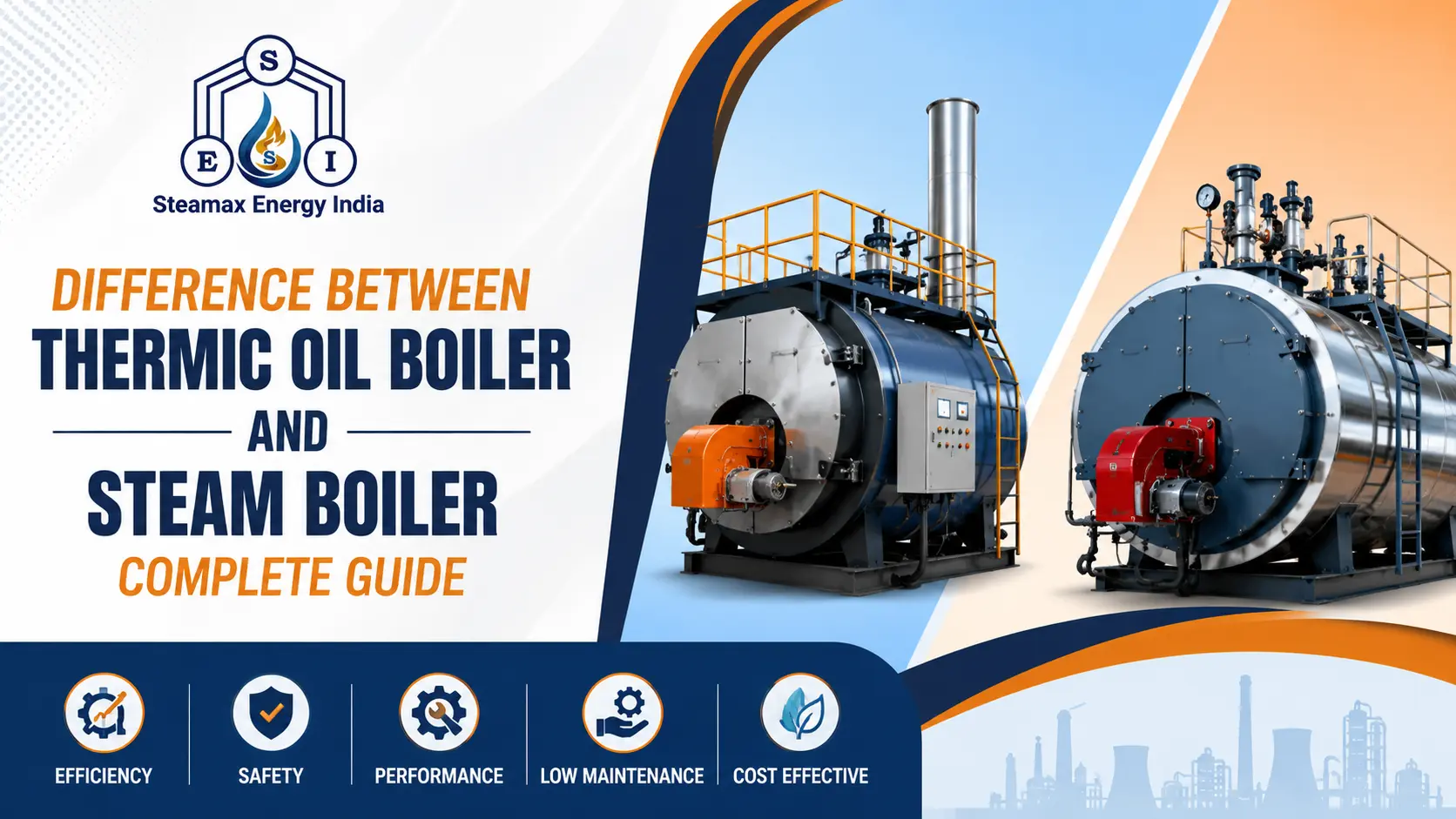
Industrial heating systems are very important for the proper running of different processes within an industry. Be it food production, drugs, chemicals, clothing, paper making, or engineering; the right choice of heating system goes a long way in ensuring productivity and efficiency. There are many industrial heating systems but the two most common include the thermal oil boiler and steam boiler.
While both systems are designed to transfer heat for industrial processes, they operate differently and offer distinct advantages depending on the application. Understanding the difference between a steam boiler and a thermal oil heating system can help businesses make informed decisions and maximize operational efficiency.
In this complete guide, we will compare thermal oil boilers and steam boilers in terms of working principle, efficiency, operating temperature, maintenance, safety, and industrial applications.
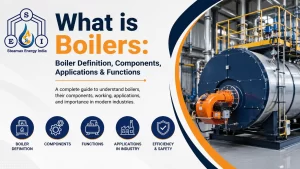
What is a Steam Boiler?
A steam boiler is a heating system that converts water into steam by applying heat generated from the combustion of fuel. The produced steam is then distributed through pipelines and used for various industrial processes such as heating, sterilization, drying, cooking, and power generation.
Steam boilers are widely used in industries where steam is required as a process medium. These systems can operate at different pressure levels depending on production requirements and are available in various capacities and configurations.
Read More about Industrial Steam Boiler, Component & Working Principle
Working Principle of a Steam Boiler
The operation of a steam boiler involves the following steps:
- Water is fed into the boiler.
- Fuel is burned in the combustion chamber.
- Heat generated from combustion transfers to the water.
- Water converts into steam.
- Steam is supplied to process equipment through pipelines.
Steam boilers are known for their ability to deliver rapid heating and support applications requiring direct steam usage.
What is a Thermal Oil Boiler?
A thermal oil boiler, also known as a thermic fluid heater, is an industrial heating system that uses heat transfer oil instead of water or steam. The oil circulates through a closed-loop system and transfers heat to process equipment without generating steam.
Unlike steam boilers, thermal oil heating systems can achieve very high temperatures at atmospheric pressure, making them ideal for industries requiring precise and consistent heating.
Working Principle of a Thermal Oil Boiler
The working process of a thermal oil heating system includes:
- Thermal oil is heated inside the heater.
- A circulation pump transfers the heated oil through pipelines.
- Heat is transferred to the required process equipment.
- The cooled oil returns to the heater for reheating.
- The cycle continues in a closed loop.
This method provides efficient heat transfer while eliminating many of the challenges associated with steam generation.
Major Differences Between Thermic Oil Boiler and Steam Boiler
1. Heat Transfer Medium
The primary difference lies in the heat transfer medium.
Steam Boiler
- Uses water and steam for heat transfer.
Thermal Oil Boiler
- Uses specially formulated thermal oil.
Because thermal oil has a higher boiling point than water, it can achieve elevated temperatures without requiring high pressure.
2. Operating Temperature
Temperature capability is one of the biggest differences between these systems.
Steam Boiler
- Generally operates up to 180°C to 220°C depending on pressure.
Thermal Oil Boiler
- Can easily achieve temperatures of 300°C to 350°C at low pressure.
For industries requiring high-temperature heating, thermal oil boilers are often the preferred choice.
3. Operating Pressure
Steam boilers require higher pressure to achieve higher temperatures.
Steam Boiler
- High-pressure operation.
- Requires pressure vessels and safety controls.
Thermal Oil Heating System
- Operates at low pressure.
- Provides high temperatures without significant pressure buildup.
This reduces operational complexity and improves safety.
4. Energy Efficiency
Efficiency is a critical factor in industrial operations.
Modern thermal oil heating systems generally offer excellent thermal efficiency because there is no energy loss associated with steam traps, condensate return, or flash steam.
Steam systems can experience energy losses due to:
- Condensate leakage
- Steam leakage
- Blowdown losses
- Distribution losses
As a result, thermal oil boilers often provide better heat utilization in high-temperature applications.
5. Maintenance Requirements
Maintenance plays an important role in long-term operating costs.
Steam Boilers
Require:
- Water treatment
- Scale removal
- Boiler inspections
- Steam trap maintenance
- Condensate management
Thermal Oil Boilers
Require:
- Periodic oil quality checks
- Pump inspection
- Routine cleaning
The maintenance requirements of a thermal boiler are generally lower than those of a steam boiler.
6. System Complexity
Steam systems involve multiple components such as:
- Water treatment plants
- Steam traps
- Condensate recovery systems
- Feed water tanks
- Pressure control systems
A thermal oil heating system is comparatively simpler because it operates in a closed-loop circuit without steam generation.
This simplicity often results in easier installation and operation.
7. Safety Considerations
Safety is a major concern in industrial heating applications. Steam boilers operate under pressure, making regular inspection and safety compliance essential.
A thermal boiler operates at significantly lower pressure while still delivering high temperatures. This reduces the risk associated with high-pressure steam systems and contributes to safer operation.
8. Heat Control and Temperature Stability
Many industrial processes require precise temperature control.
Thermal oil boilers provide:
- Uniform heating
- Stable temperature control
- Accurate heat transfer
This makes them highly suitable for industries such as:
- Chemical processing
- Bitumen plants
- Plastic manufacturing
- Textile processing
Steam boilers may experience temperature fluctuations due to pressure variations within the system.
Applications of Steam Boilers
Steam boilers are commonly used in:
- Food processing plants
- Pharmaceutical industries
- Hospitals
- Textile units
- Laundry facilities
- Dairy processing plants
- Breweries
- Paper manufacturing industries
These industries rely heavily on steam for heating, sterilization, and production processes.
Applications of Thermal Oil Boilers
Thermal oil boilers are widely used in:
- Chemical industries
- Asphalt plants
- Bitumen processing units
- Plastic manufacturing
- Laminate industries
- Wood processing industries
- Printing industries
- Paint and coating plants
- Food processing industries requiring indirect heating
Because thermal oil heating systems provide high temperatures with excellent control, they are ideal for specialized industrial applications.
Which System Should You Choose?
The choice between a steam boiler and a thermal oil boiler depends on your process requirements.
Choose a Steam Boiler if:
- Your process requires steam directly.
- Sterilization is necessary.
- Humidity generation is required.
- Steam-based heating is essential.
Choose a Thermal Oil Boiler if:
- High temperatures are required.
- Low-pressure operation is preferred.
- Precise temperature control is important.
- Reduced maintenance is desired.
- Energy efficiency is a priority.
Conclusion
Both steam boilers and thermal oil boilers play an essential role in modern industrial operations. While steam boilers remain the preferred option for processes requiring direct steam, thermal oil heating systems offer significant advantages in high-temperature applications where efficiency, safety, and temperature control are critical.
The knowledge of the distinction between the two forms of technology would be important for companies to choose the right heating equipment that suits their unique conditions. This is possible through consideration of several factors such as temperature requirement, maintenance cost, operational cost, among others.
Steamax Energy India offers quality heating solutions using steam boiler technology as well as thermal oil heater technology.