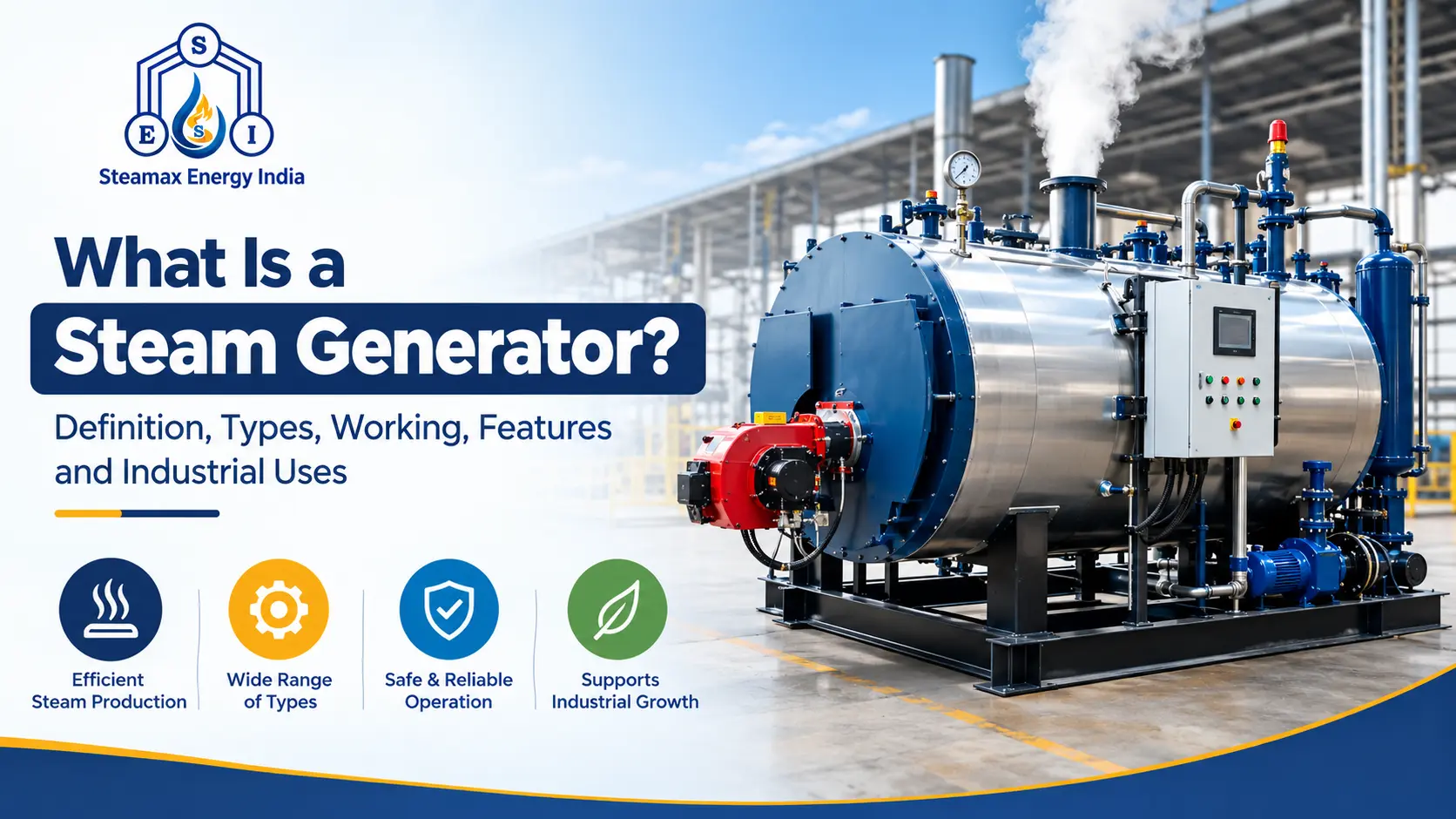
Steam is widely used in industrial processes for heating, sterilization, drying, cooking, cleaning, and other applications. To produce steam efficiently, industries use equipment known as steam generators. But what is a steam generator, and how does it work?
A steam generator is designed to convert water into steam by transferring heat energy to water. Depending on the application, fuel availability, steam pressure, and required capacity, different types of steam generators can be used.
Steamax Energy India provides industrial steam generation solutions designed around different process requirements. This guide explains the define steam generator concept, its types, components, working principle, features, applications, and safety considerations.
Definition: What Is a Steam Generator?
To define steam generator in simple terms, it is a system that heats water and converts it into steam using a suitable source of heat or electrical energy.
Unlike the basic concept of a conventional boiler, many steam generators are designed for rapid steam generation using compact heat-transfer arrangements. The exact construction depends on the required pressure, steam capacity, fuel, and industrial application.
A steam generator may also be called a steam maker because its primary purpose is to produce usable steam for a process.
The generated steam can be supplied directly to process equipment or distributed through a steam pipeline to different areas of an industrial facility.
Types of Steam Generators
Different industrial requirements call for different steam-generation technologies. Some commonly used types include:
1. Electric Steam Generator
An electric steam generator uses electrical heating elements to heat water and produce steam. It is suitable for applications where electricity is readily available and precise steam generation is required.
2. Gas-Fired Steam Generator
Gas-fired systems use natural gas or other suitable gaseous fuels as the heat source. They can be used in industries requiring continuous steam production.
3. Oil-Fired Steam Generator
Oil-fired steam generators use liquid fuel to generate the required heat. They can be considered where suitable liquid-fuel infrastructure is available.
4. Solid-Fuel Steam Generator
These systems use fuels such as coal, biomass, wood, or other suitable solid fuels. They may be selected where solid fuel is economical or readily available.
5. Process Steam Generator
A process steam generator is designed specifically to supply steam for industrial processes. Its capacity and operating conditions are selected according to the steam consumption and requirements of the particular process.
Components and Diagram
The main components of a steam generator vary according to the design, but a typical system can include:
- Water feed system
- Heating or combustion system
- Heat-transfer surfaces
- Steam outlet
- Pressure gauge
- Temperature monitoring system
- Water-level control
- Safety valve
- Control panel
- Feedwater pump
- Insulation
- Drain and blowdown arrangement
Simple Steam Generation Flow
Water Supply → Feedwater System → Heating Zone → Heat Transfer → Steam Formation → Steam Outlet → Process Equipment
Water enters the system through the feedwater arrangement. Heat is then transferred to the water, causing it to reach its boiling condition and form steam. The steam is collected and supplied through the outlet to the required process.
Working Principle of a Steam Generator
The basic working principle is based on heat transfer and phase conversion. Water absorbs heat energy until it reaches the temperature required for steam formation.
The heat source can be fuel combustion, electrical heating, or another suitable energy source. The generated steam is then separated from the water and supplied to the process.
The efficiency of steam production depends on factors such as heat-transfer efficiency, water quality, insulation, combustion performance, operating pressure, and system design.
Step-by-Step Working
Understanding how steam generators operate becomes easier when the process is divided into simple steps.
Step 1: Water Feeding
Treated water is supplied to the steam generator through a feedwater system. Proper water quality helps reduce scale and deposits inside the equipment.
Step 2: Heat Generation
The system produces heat using its selected energy source. In fuel-fired systems, combustion generates the required thermal energy, while electric systems use heating elements.
Step 3: Heat Transfer
The generated heat is transferred to the water through the heat-transfer surfaces. Efficient heat transfer is important for maintaining consistent steam production.
Step 4: Steam Formation
As the water absorbs sufficient heat, it changes from a liquid into steam. The steam reaches the required operating condition based on system design and pressure.
Step 5: Steam Collection
The generated steam is collected within the steam-generation section before being directed toward the outlet.
Step 6: Steam Supply
Steam is supplied through a controlled outlet and can be transported to process equipment through suitable piping.
Step 7: Continuous Operation
For continuous industrial applications, water feeding, heating, pressure monitoring, and steam supply are controlled to maintain stable operation.
Features of Steam Generators
Modern steam generators can provide several features that make them suitable for industrial applications.
Important features may include:
- Compact equipment design
- Rapid steam generation
- Consistent steam supply
- Automatic operating controls
- Pressure and temperature monitoring
- Water-level protection
- Safety valves and control systems
- Efficient heat transfer
- Easy operation and maintenance
- Suitable configurations for different fuel options
- Insulated construction for reduced heat loss
- Application-specific capacity and pressure options
The actual specifications depend on the model and industrial requirement.
Industrial Uses of Steam Generators
Steam has excellent heat-transfer properties, making it useful in many industrial operations. Some major applications include:
Food Processing
Steam is used for cooking, heating, sterilization, blanching, and other food-processing operations.
Pharmaceutical Industry
Pharmaceutical facilities use steam for sterilization, cleaning, controlled heating, and process applications where suitable steam quality is required.
Textile Industry
Steam can be used for fabric processing, dyeing, finishing, drying, and other textile operations.
Chemical Industry
Chemical plants use process steam for heating reactors, maintaining process temperatures, and other thermal applications.
Dairy Industry
Steam is commonly used for heating, pasteurization-related processes, cleaning, and sterilization applications.
Packaging and Paper Industry
Steam can support heating, drying, and processing operations in paper and packaging manufacturing.
Hospitality and Healthcare
Hotels, hospitals, and institutional facilities can use steam for laundry, sterilization, kitchen operations, and heating applications.
Safety Considerations
Steam generators operate with high temperatures and, depending on the design, pressurized steam. Proper safety practices are therefore essential.
Important considerations include:
- Install the equipment according to applicable safety requirements.
- Use properly functioning pressure and temperature controls.
- Check safety valves regularly.
- Maintain appropriate water levels.
- Use treated feedwater where required.
- Inspect steam and water connections periodically.
- Follow the manufacturer’s operating instructions.
- Schedule preventive maintenance.
- Train operators before allowing them to operate the equipment.
- Never bypass safety controls or protective devices.
Regular inspection and maintenance can help identify potential problems before they affect production or equipment safety.
Frequently Asked Questions
What is a steam generator?
A steam generator is equipment that heats water using thermal or electrical energy and converts it into steam for industrial or commercial applications.
What is the difference between a steam generator and a steam maker?
The terms can sometimes be used interchangeably. A steam maker is a general term for equipment that produces steam, while a steam generator generally refers to an engineered system designed for controlled steam production.
What are steam generators used for?
Steam generators are used for heating, sterilization, cooking, drying, cleaning, and various industrial process applications.
What is a process steam generator?
A process steam generator is designed to produce steam specifically for industrial processes. Its capacity, pressure, and configuration are selected according to the application’s requirements.
How does steam production take place?
Steam production takes place when water receives sufficient heat energy to change from a liquid into steam. The generated steam is then collected and supplied to the required application.
Which factors should be considered when selecting a steam generator?
Important factors include required steam capacity, operating pressure, fuel or energy source, water quality, available space, operating hours, application requirements, and maintenance considerations.
Why is water quality important in steam generation?
Proper water quality helps reduce scale, corrosion, and deposits that can affect heat transfer and equipment performance. Suitable water treatment should be selected according to the system and manufacturer’s requirements.
Conclusion
Understanding what is a steam generator helps industries select the right equipment for their steam requirements. From electric and fuel-fired systems to specialized process steam generators, the appropriate configuration depends on the application’s capacity, pressure, energy source, and operating conditions.
Efficient steam production can support heating, sterilization, drying, cooking, and numerous other industrial processes. With suitable equipment selection, proper operation, regular maintenance, and appropriate safety practices, steam generation systems can provide a dependable source of process heat.
Steamax Energy India provides industrial steam-generation solutions for businesses looking for equipment suited to their specific process requirements.