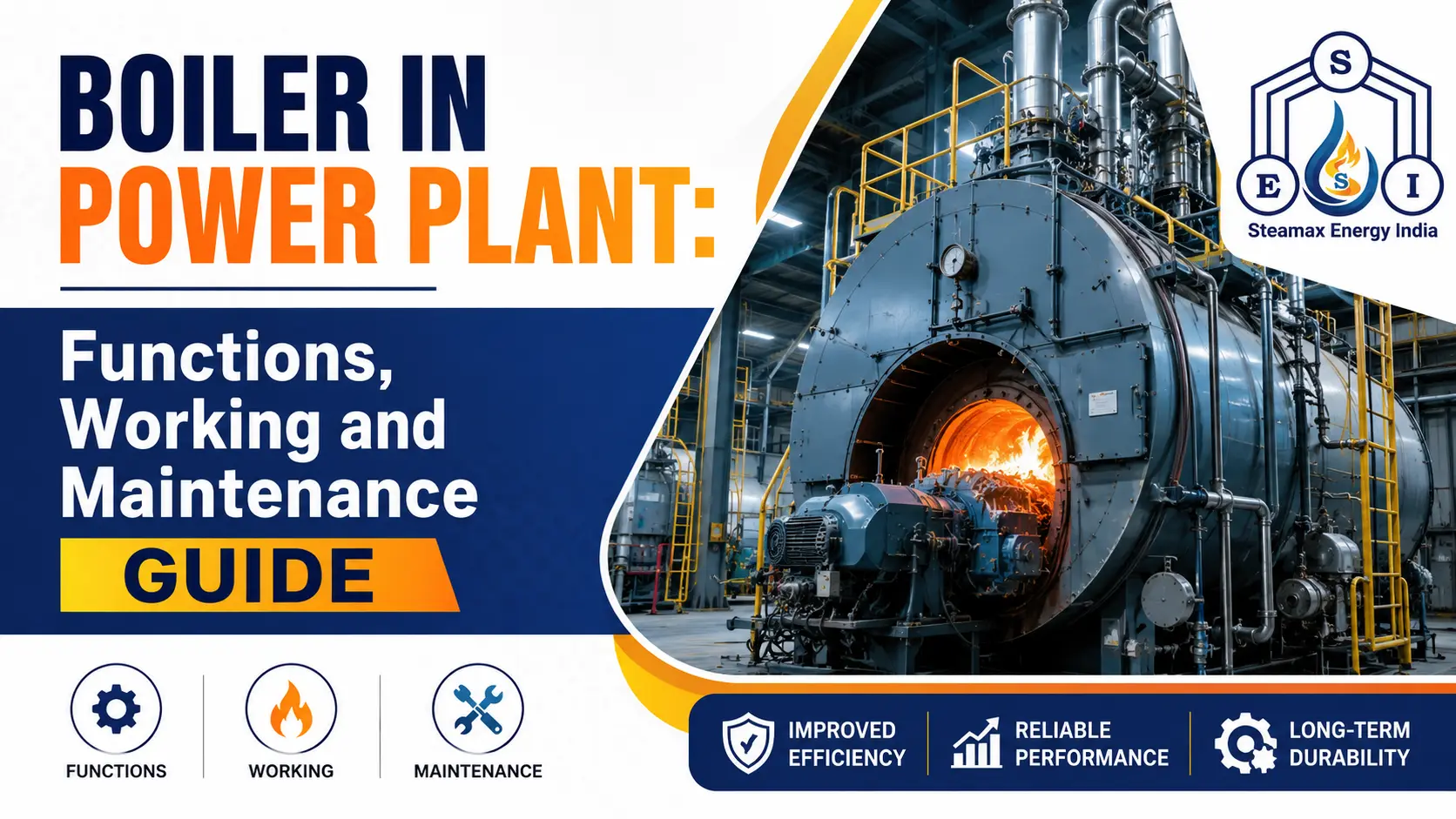
Boilers play a major role in power generation systems because they are responsible for producing steam required for generating electricity. Whether it is a manufacturing facility or a large power station, a boiler system acts as the heart of the operation. Without a properly functioning boiler, maintaining a continuous power supply becomes difficult. In modern industries and power generation facilities, understanding the role of a boiler in power plant operations is important because it directly affects performance, fuel efficiency, and operational reliability. This guide explains the functions, working process, and maintenance practices of boilers in simple language.
What is a Boiler in Power Plant?
A boiler in power plant is a closed vessel where water is heated at high temperatures to produce steam. This steam is then used to rotate turbines, which generate electricity. The main purpose of a boiler is to convert water into high-pressure steam using heat energy from fuel sources such as coal, gas, oil, biomass, or other fuels. The steam produced by the boiler helps power generation systems operate efficiently and continuously.
Also Read: Steam Boiler Troubleshooting and Maintenance Guide
Importance of Boiler Systems in Power Plants
A boiler system is one of the most important components of any power generation process. Since electricity production depends heavily on steam generation, boiler performance directly impacts the efficiency of the plant.
A properly designed boiler plant helps:
- Produce steam continuously
- Improve fuel efficiency
- Reduce energy losses
- Increase system reliability
- Support safe operations
Efficient boiler systems also reduce maintenance costs and increase equipment lifespan.
Functions of Boiler in Power Plant
The primary function of a boiler is to convert water into steam, but it performs several other important tasks as well.
- Steam Generation- The main function of a boiler is producing high-pressure steam for turbines. Steam acts as the energy source that drives the turbine blades and generates electricity.
- Heat Transfer- Boilers transfer heat generated by fuel combustion into water. Efficient heat transfer helps reduce fuel consumption and improve operational performance.
- Maintaining Pressure Levels- Boilers maintain the required steam pressure throughout the system. Stable pressure ensures consistent power generation.
- Supporting Continuous Power Production- Power plants require uninterrupted operations. Boilers help maintain a constant steam supply for continuous electricity generation.
Working Principle of Boiler in Power Plant
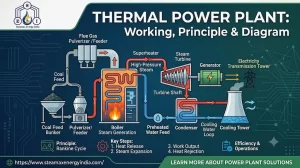
The working process of a boiler in power plant is straightforward and follows a sequence of steps.
Step 1: Fuel Combustion
Fuel such as coal, natural gas, biomass, or oil is burned inside the combustion chamber. The burning process generates heat energy.
Step 2: Heat Transfer to Water
The heat generated from combustion passes through boiler tubes and transfers energy to water.
Step 3: Steam Formation
As the water temperature rises, it converts into steam under high pressure.
Step 4: Steam Supply to Turbine
The steam travels toward the turbine where its energy rotates turbine blades.
Step 5: Electricity Generation
The rotating turbine drives a generator that converts mechanical energy into electrical energy. After completing the cycle, steam is cooled and converted back into water for reuse.
Boiler in Thermal Power Plant
A boiler in thermal power plant works similarly but specifically uses heat energy generated by burning fuel sources to create steam.
The process in a thermal power station mainly depends on steam production because the generated steam powers the turbine system.
A thermal power plant boiler generally operates under high pressure and high temperature conditions. Therefore, these systems require proper design and regular inspections for safe operation.
Types of Boilers Used in Power Plants
Different power plants use different boiler systems based on fuel type, pressure requirements, and operational needs.
- Fire Tube Boilers- In fire tube boilers, hot gases move through tubes surrounded by water. These boilers are generally suitable for lower-pressure applications.
- Water Tube Boilers- Water tube boilers contain water inside tubes while hot gases flow around them. These boilers are commonly used in large power plants because they can handle high-pressure operations.
- Pulverized Fuel Boilers- These boilers burn finely powdered fuel for improved combustion efficiency and better heat transfer.
- Waste Heat Recovery Boilers- These systems recover heat from exhaust gases and convert it into usable steam energy.
Boilers in Thermal Power Plant and Their Importance
Modern boilers in thermal power plant operations are designed to improve efficiency while reducing fuel usage.
These boiler systems provide several benefits:
- Better heat utilization
- Improved steam generation
- Reduced fuel waste
- Stable operating performance
- Lower operational costs
As power demand increases, efficient boiler systems become even more important for maintaining productivity.
Common Problems in Boiler Plant Operations
Like other industrial equipment, boiler systems can develop operational issues over time.
Some common problems include:
- Low steam pressure
- Water leakage
- Scale buildup
- Burner failure
- Corrosion inside tubes
- Excess fuel consumption
- Pressure fluctuations
Regular inspections help detect these issues before they become serious.
Maintenance Guide for Boiler Systems
Proper maintenance is important for ensuring safe and efficient boiler operation. Ignoring maintenance can lead to performance issues and unexpected breakdowns.
- Daily Maintenance- Operators should monitor water levels, inspect pressure readings, and check for unusual sounds or visible leaks.
- Weekly Maintenance- Weekly maintenance should include inspection of valves, burner systems, and control units.
- Monthly Maintenance- Monthly servicing should focus on cleaning components, checking electrical systems, and inspecting pressure gauges.
- Annual Maintenance- Annual inspections include internal cleaning, scale removal, complete system testing, and replacement of worn parts.
- Following a maintenance schedule can significantly increase equipment lifespan.
Tips to Improve Boiler Efficiency
Improving boiler performance does not always require major system changes. Small maintenance practices can create noticeable improvements.
Some effective methods include:
- Maintain proper water quality
- Clean boiler tubes regularly
- Monitor fuel usage
- Inspect insulation systems
- Train operators properly
These practices help reduce energy loss and improve system reliability.
About Steamax Energy India
Steamax Energy India is a trusted steam boiler manufacturing company focused on delivering reliable and high-performance boiler solutions for various industrial applications. The company specializes in manufacturing efficient steam boiler systems designed to meet the operational requirements of industries such as pharmaceuticals, food processing, chemicals, textiles, manufacturing, and many more.
As a dedicated steam boiler manufacturer, Steamax Energy India focuses on quality, safety, and long-term performance. The company offers advanced boiler systems that are designed for improved fuel efficiency, consistent steam generation, and reduced operational costs.
Conclusion
A boiler in power plant is one of the most important systems responsible for steam generation and efficient power production. Understanding its functions, working process, and maintenance requirements helps industries improve operational efficiency and reduce costs.
Proper care of a boiler plant, regular inspections, and timely servicing can prevent breakdowns and extend system life. Modern thermal power plant boiler systems are designed for higher efficiency, but regular maintenance remains essential for achieving the best performance.