In industries where steam is used, even a small change in steam quality can affect the final product. Whether it is food processing, pharmaceuticals, or textiles, one important factor always plays a role — the dryness fraction of steam.
If steam is not of good quality, product results will not be consistent. That’s why it is important to understand what the dryness fraction of steam is and how it impacts production.
What is Dryness Fraction?
It is a value that tells us how much of the steam is dry (vapor) and how much is water (moisture). If steam contains more water particles, it is called wet steam. If it contains very little moisture, it is called dry steam, which is ideal for industrial use.
Define Steam Dryness Fraction of Steam
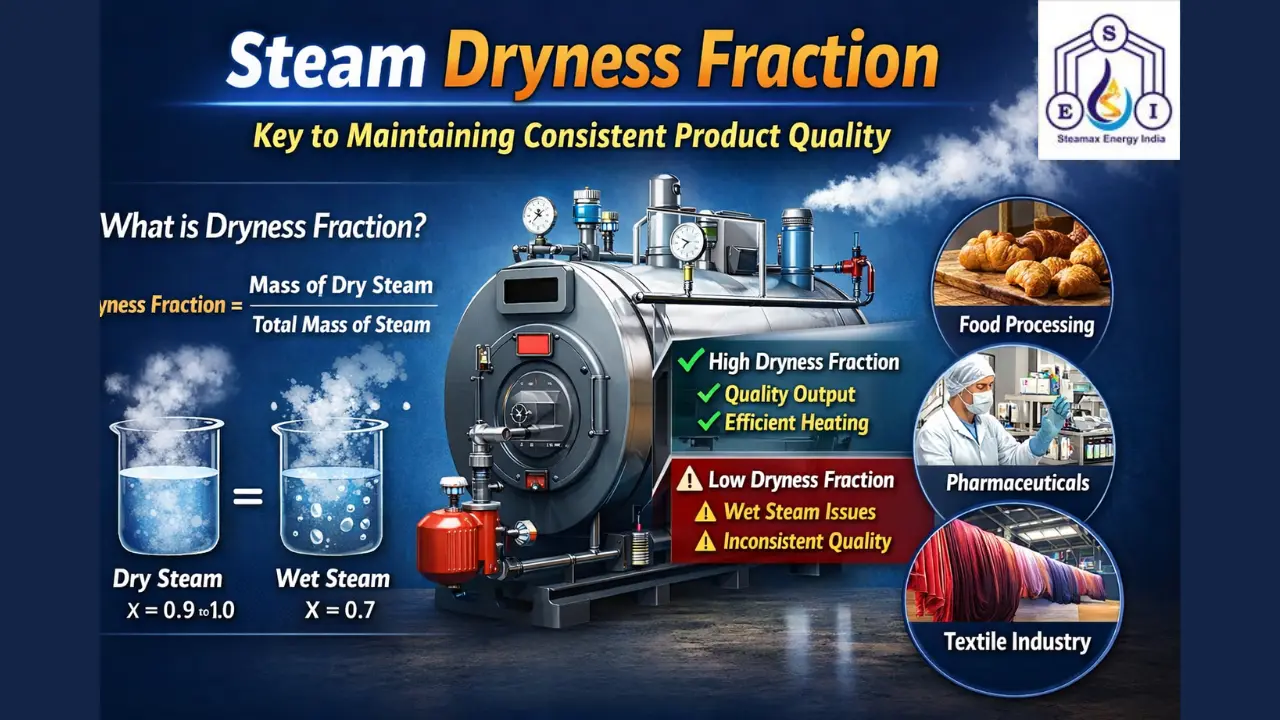
Dryness fraction is the ratio of the mass of dry steam to the total mass of steam (including water droplets).
- Its value always lies between 0 and 1.
- A value close to 1 means steam is almost completely dry
- A lower value means more moisture is present
This makes the dryness fraction an important indicator of steam quality.
Why Dryness Fraction is Important
Dryness fraction is not just a theory—it directly affects how your system performs.
When steam is dry, heat transfer becomes efficient, and processes run smoothly. But when steam contains moisture, it reduces efficiency and creates problems.
It mainly affects:
- Product consistency
- Energy usage
- Equipment life
This is why maintaining the right dryness fraction of steam is very important in any industry.
How Dryness Fraction Affects Product Quality
The dryness fraction is truly the key to maintaining consistent product quality. In the food industry, wet steam can add unwanted moisture, affecting taste and texture. In pharmaceuticals, even small changes in temperature can affect product safety. In textile processes, wet steam may cause uneven finishing. In all these cases, poor steam quality leads to poor results. A stable and high dryness fraction of steam ensures that every batch produced is consistent and meets quality standards.
Ideal Dryness Fraction in Practice
In real industrial conditions, achieving 100% dry steam is difficult. However, most systems aim for a dryness fraction between:
- 0.95 to 0.99
This range ensures that steam is almost dry and suitable for efficient industrial use without causing damage to equipment.
How to Improve Dryness Fraction of Steam
If your steam quality is not up to the mark, it can be improved with proper system management.
- Installing steam separators helps remove water droplets
- Regular boiler maintenance improves steam generation
- Proper insulation prevents heat loss and condensation
- Steam traps remove unwanted moisture from pipelines
These simple steps can significantly improve the dryness fraction of steam and overall system performance.
Problems Caused by Low Dryness Fraction
If the dryness fraction is low, it can lead to serious issues in your system. Wet steam can damage equipment due to the presence of water droplets. It also reduces heating efficiency, which increases fuel consumption. Most importantly, it leads to inconsistent product quality. Over time, this can increase operational costs and reduce productivity.
Role of Steam Quality in Modern Industries
Today’s industries focus on efficiency, quality, and cost control. Steam plays a major role in achieving all three. Understanding what is dryness fraction of steam helps businesses control their processes better. When steam quality is maintained, production becomes more stable, and results become more predictable. This gives companies a competitive advantage in the market.
Choosing the Right Steam Boiler System
To maintain a proper dryness fraction, having the right equipment is essential.
A well-designed boiler system ensures stable steam generation with minimum moisture content. Choosing a reliable steam boiler manufacturer is important in tech solutions—but in steam systems, choosing the right boiler manufacturer matters just as much. STEAMAX ENERGY INDIA provides efficient and reliable steam solutions that help industries maintain high steam quality and consistent performance.
Conclusion
In simple terms, the dryness fraction of steam is a key factor that controls both efficiency and product quality. If steam is wet, performance drops and results become inconsistent. But if steam is dry and stable, it improves efficiency, reduces cost, and ensures better output.
So, understanding what is dryness fraction, and learning to define dryness fraction of steam, is essential for any industry using steam. Maintaining the right dryness fraction is not just a technical need—it is the foundation of consistent product quality.