
When industries invest in a boiler system, the first question they often ask is what is boiler efficiency and how to calculate it accurately. Boiler efficiency is one of the most critical parameters that determine fuel consumption, operating cost, heat output, and overall plant performance. At Steamax Energy India, we believe that understanding the boiler efficiency calculation formula and combustion process helps industries achieve maximum energy savings and safer operations. In this detailed guide, we will explain the formula for efficiency, the role of combustion, different boiler efficiency equations, and practical methods to improve performance using real industrial scenarios.
Also Read: Thermal Power Plant: List of Thermal Power Plant in India
1. What is Boiler Efficiency?
Boiler efficiency refers to how effectively a boiler converts fuel energy into usable steam or heat. The higher the efficiency, the less fuel is wasted. This is why industries rely on correct industrial boiler efficiency calculations to optimize production.
Simply put, boiler efficiency tells you how much heat you get from the fuel you burn. A small increase of even 1–2% in efficiency can save lakhs of rupees annually.
2. Why Combustion Matters in Boiler-Efficiency?
Combustion is the process of burning fuel with oxygen to produce heat. Efficient combustion ensures complete burning of fuel, reducing losses and improving output. If combustion is incomplete, energy is wasted, emissions increase, and operating cost rises.
For any industry, improving combustion efficiency means: Lower fuel cost, Higher steam generation, Reduced pollution, Longer boiler life. This is why understanding the relationship between boiler efficiency calculation formula and combustion is essential.
3. Formula for Efficiency – The Basics
The formula for efficiency of a boiler depends on two major methods:
A. Direct Method (Simple Method): Also called the working efficiency formula, it calculates how much heat is absorbed by water compared to the heat available from fuel.
B. Indirect Method (Losses Method): This method calculates the total heat losses and subtracts them from the input fuel energy. Both methods are widely used for industrial boiler efficiency calculations.
4. Boiler Efficiency Formula (Direct Method)
The most common formula is:
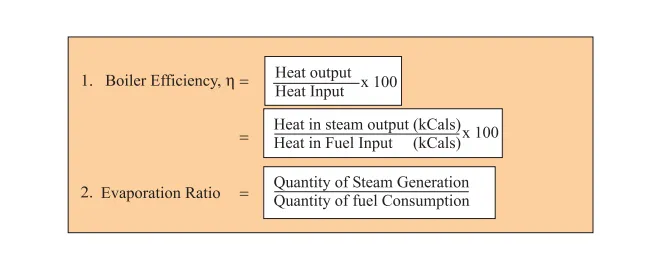
Boiler Efficiency = (Heat Output / Heat Input) × 100
Here,
Heat Output = Steam generated × (Enthalpy of steam – Enthalpy of feedwater)
Heat Input = Fuel consumption × Calorific value of fuel
This is also known as the boiler efficiency equation and is widely used in industries running steam boilers, thermic fluid heaters, and hot water generators. Indirectly, it answers the question—how efficiency is calculated in a practical environment.
5. Efficiency of Boiler Formula (Indirect Method)
The efficiency of boiler formula using the indirect method is:
Efficiency = 100 – (Total Heat Losses)
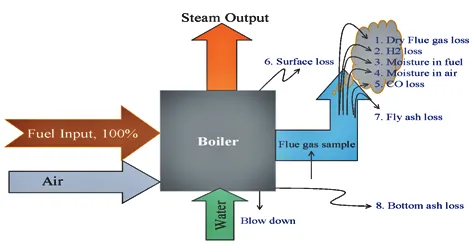
Heat losses include: Dry flue gas loss, Moisture in fuel loss, Hydrogen combustion loss, Unburnt fuel loss, Radiation and convection loss. For coal-based systems, clients often ask for a PF boiler full form. PF stands for Pulverized Fuel, a type of boiler that burns powdered coal for high efficiency. This is why combustion quality becomes extremely important for accurate boiler efficiency calculations.
6. Formula for Boiler Efficiency in Electrical Boilers
For electric boilers, fuel combustion is not involved. Instead, the system converts electrical energy into heat. The electrical efficiency formula or electric efficiency formula is:
Electrical Efficiency = (Useful Heat Output / Electrical Energy Input) × 100
Electric boilers often have high efficiency because electrical energy converts directly into heat with minimum loss.
7. Thermal Efficiency Formula Used in Boilers
The term thermal efficiency formula or formula for thermal efficiency is used when evaluating both combustion boilers and electrical boilers. It measures how much thermal energy is delivered relative to energy consumed.
Thermal Efficiency = (Heat Delivered / Energy Consumed) × 100
This formula is widely used during boiler audits at Steamax Energy India to monitor system performance.
Diagram
8. How to Calculate Boiler Efficiency – Step-by-Step Guide
Here is a simple method for industries to understand how to calculate boiler efficiency practically:
Step 1: Measure Fuel Consumption
Record fuel usage per hour (coal, diesel, gas, biomass, etc.).
Step 2: Measure Steam Generation Rate
Check total steam output in kg/hr or tons/hr.
Step 3: Evaluate Steam and Feedwater Parameters
Note steam temperature, pressure, and feedwater temperature.
Step 4: Insert Values in the Boiler Efficiency Formula
Use the direct method formula:
Boiler Efficiency = (Steam Output × Enthalpy Gain) ÷ (Fuel Consumption × CV) × 100
Step 5: Cross-check using Indirect Method
Measure flue gas losses to confirm the results.
By using both methods, industries get accurate boiler efficiency calculations and can identify areas of improvement.
9. Factors Affecting Boiler Efficiency
Several factors influence overall boiler performance:
- Quality of Combustion- Poor air–fuel ratio leads to unburnt fuel and reduces efficiency.
- Flue Gas Temperature- Higher flue gas temperature = higher heat loss.
- Boiler Design & Maintenance- Soot deposits, leakages, or damaged tubes affect efficiency.
- Fuel Type- Coal, biomass, and diesel have different calorific values affecting calculations.
- Blowdown Losses- Excessive blowdown leads to heat waste. Understanding these helps industries take corrective action.
10. Why Accurate Boiler Efficiency Calculation is Important for Industries
Industries rely on boilers 24×7, and small inefficiencies can create huge cost differences. Benefits of Correct Boiler Efficiency Calculations:
Saves fuel cost, Improves combustion quality, Increases steam output, Reduces emissions, Enhances equipment life, Ensures safety and stable operation. At Steamax Energy India, we regularly perform detailed boiler audits using advanced tools such as flue gas analyzers, thermal cameras, and data loggers.
11. Real-Time Example of Boiler Efficiency Calculation
Suppose a boiler produces 10,000 kg/hr of steam and consumes 800 kg/hr of fuel with a calorific value of 4500 kcal/kg. Using the boiler-efficiency equation, if enthalpy gain is 400 kcal/kg:
Efficiency = (10,000 × 400) / (800 × 4500) × 100
Efficiency ≈ 111% / 36000 × 100 = 88.8%
This is a practical and common efficiency range for industrial systems.
Conclusion – Improving Efficiency with Steamax Energy India
Understanding the boiler-efficiency calculation formula and combustion is essential for any industry looking to reduce operating costs and boost performance. Whether using coal-fired, gas-fired, biomass, PF boilers, or electric boilers, the right working efficiency formula, correct combustion control, and professional auditing ensure the best output.
At Steamax Energy India, we help industries achieve the highest efficiency through advanced controls, burner tuning, heat recovery solutions, and real-time monitoring systems. Efficient boilers mean lower bills, higher productivity, and a greener future. If you want professional boiler efficiency calculations, combustion optimization, or audit services, Steamax Energy India is ready to assist you.
Also read- How To Calculate Steam Generation In Boiler?